
An Aadhaar Enabled Payment System (AePS) transaction may fail, remain pending or display an unclear status because of authentication issues, connectivity problems, system interruptions or other processing errors. For retailers offering approved AePS services, the priority is to verify the transaction status, protect the customer and follow the authorized provider’s resolution process.
Why can an AePS transaction fail?
Possible causes include unstable connectivity, authentication not completing, temporary service interruptions, transaction restrictions, device issues or a delayed response from the transaction system. The exact reason depends on the bank, service provider and transaction. A failure message alone does not always explain what happened.
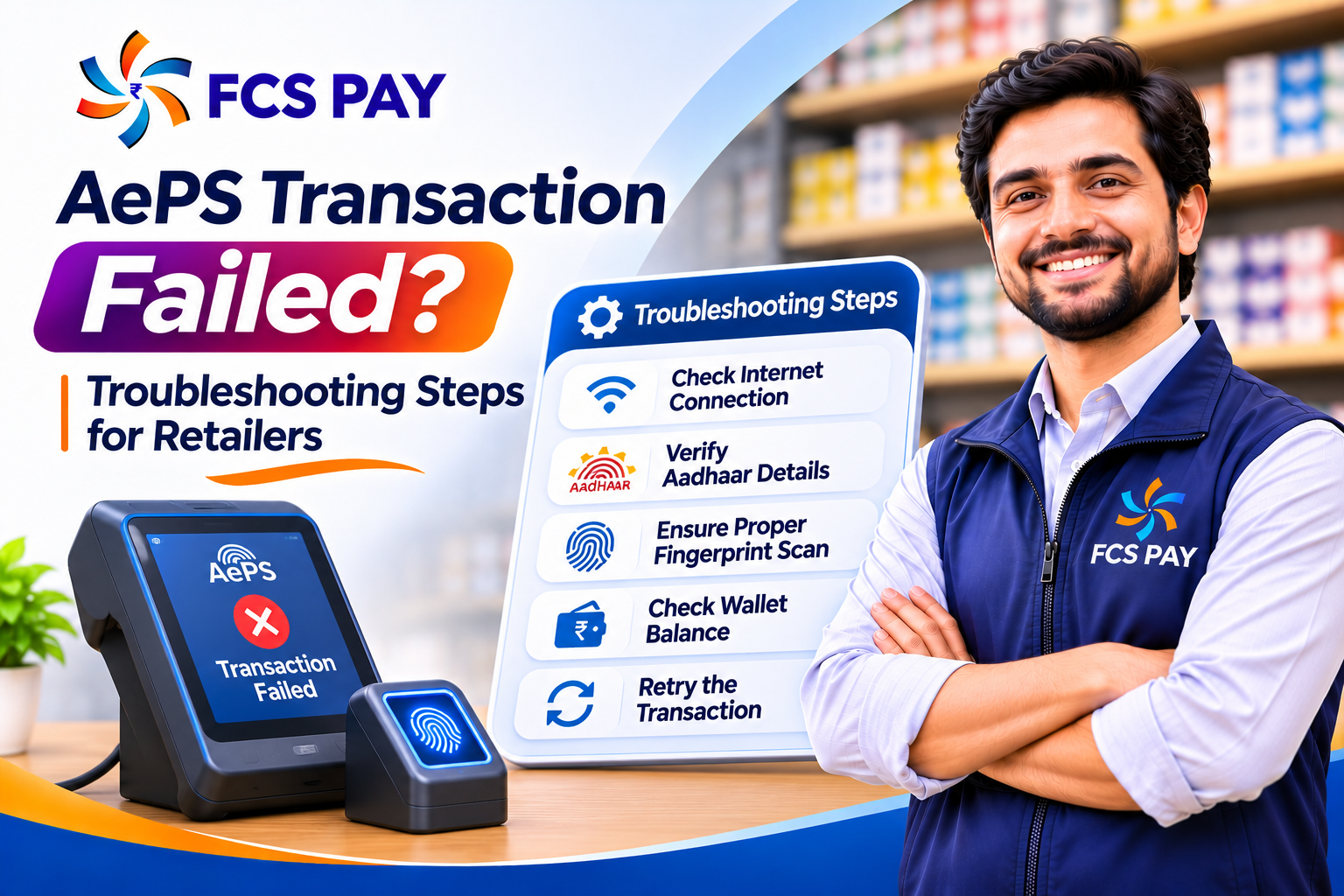
What should retailers do when an AePS transaction fails?
1. Verify the final transaction status
Check the authorized application or provider dashboard. Confirm whether the transaction is marked successful, failed or pending. Do not rely only on a device message or notification. If the status is unclear, follow the provider’s official verification and reconciliation process.
2. Record the reference securely
Where available, record the transaction reference, date, time, transaction type and displayed status using the provider’s approved recordkeeping process. Keep these details secure and share them only through authorized support channels. Never include Aadhaar numbers, biometric data or PINs in an unsecured complaint.
3. Check connectivity and device readiness
If the transaction has a confirmed failed status, check the internet connection, approved device and application according to provider instructions. If the issue continues, contact authorized technical support.
4. Explain the status clearly
Tell the customer what the authorized system currently shows. If the transaction is pending or uncertain, explain that the outcome needs verification. Do not promise an immediate reversal or refund unless the provider has confirmed the applicable outcome.
5. Escalate unresolved cases
If the status remains unclear, or a customer reports a debit without the expected outcome, raise a complaint through the provider or bank’s designated channel. Include only permitted reference details, request a complaint number and retain it for follow-up.
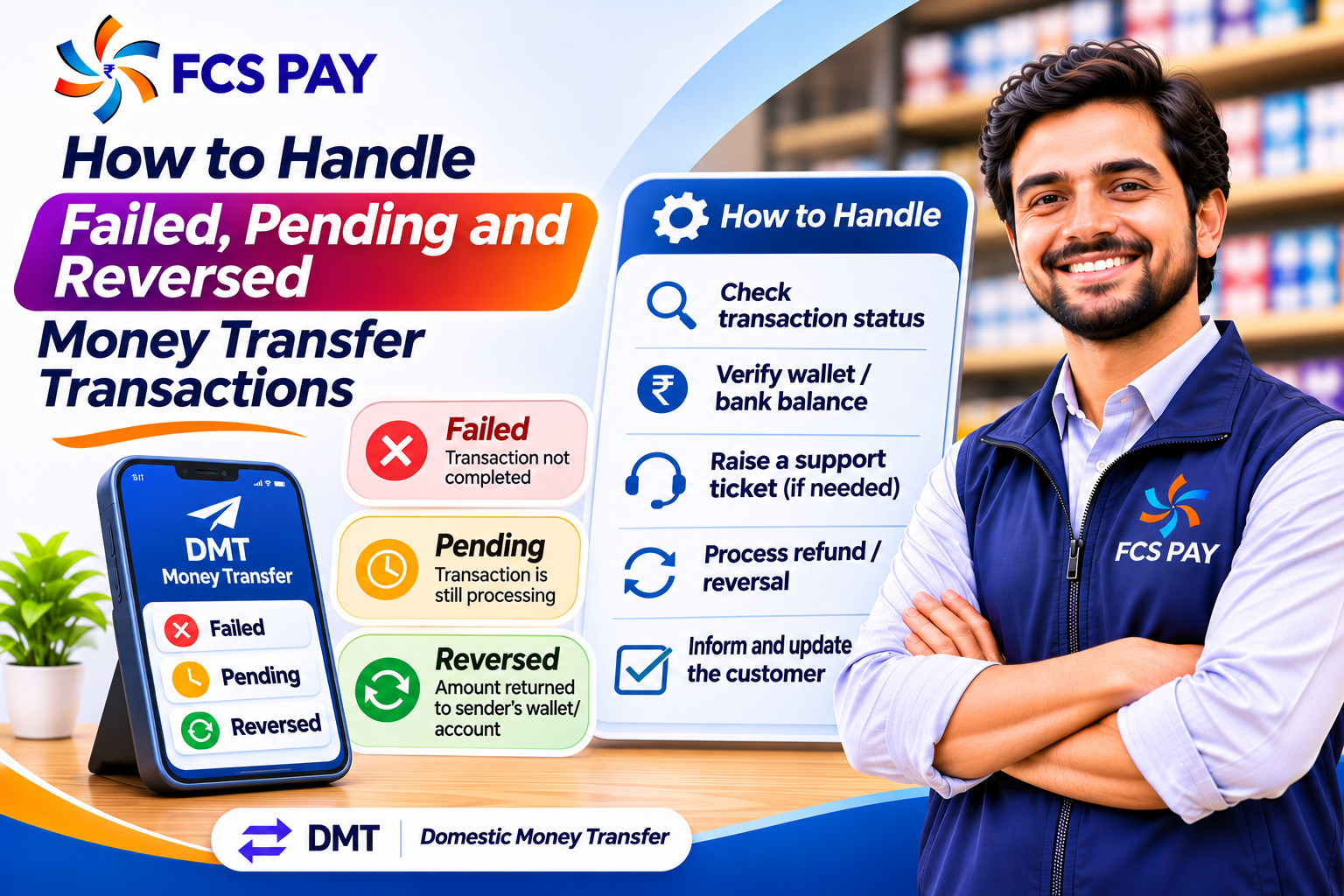
Failed, pending and reversed AePS transactions
| Status | General meaning | Retailer action |
|---|---|---|
| Failed | The system reports that the transaction did not complete successfully. | Confirm the final status and follow provider instructions. |
| Pending | A final outcome has not yet been confirmed. | Check the authorized system and avoid duplicate attempts until clarified. |
| Reversed | The recorded status indicates a reversal. | Verify the reversal and communicate the confirmed outcome. |
| Successful | The system records a completed transaction. | Follow the normal receipt and reconciliation process. |
Exact status labels, investigation steps and resolution timelines depend on the relevant bank, provider and applicable requirements.
How can retailers reduce transaction problems?
- Use approved applications and compatible devices.
- Check connectivity and device readiness before starting.
- Follow the required customer-consent and authentication process.
- Verify the final status before confirming success.
- Keep transaction records and complaint references secure.
- Train staff to recognize pending and failed statuses.
- Use official support channels for unresolved cases.
Never ask customers to disclose a PIN or share biometric information outside the authorized authentication workflow. Do not collect or store biometric information independently.
Explore AePS services with FCSPAY
Retailers considering Aadhaar-enabled banking services should understand eligibility, authorization, equipment requirements and operating terms before onboarding. Explore the FCSPAY AePS service page and the FCSPAY services overview. Confirm current availability and onboarding terms before offering a service.
Frequently asked questions
Why does an AePS transaction fail?
Possible reasons include connectivity, authentication, service interruptions, transaction restrictions or device issues. Verify the cause through the authorized system.
What should I do if an AePS transaction is pending?
Check the status through the authorized provider. Avoid repeating the transaction while the original outcome is unclear, and escalate it if it remains unresolved.
Can an AePS transaction be reversed?
A reversal may occur depending on the transaction outcome and applicable process. Verify the recorded status and follow the bank or provider’s official procedure.
Disclaimer: This article provides general operational information, not a guarantee of transaction outcomes or resolution timelines. Procedures depend on the authorized provider, relevant bank and applicable requirements.